



FREDERIC, Wis. — When the Den Hoed family left their dairy farm in eastern Washington’s Yakima Valley to farm in northwest Wisconsin, they had no idea of the battle with stray voltage they would unearth on their new farm. They would wage war with the invisible enemy for more than a decade.
The Den Hoeds — Walter and his sons, Jayce and Colton — milk 500 cows and farm 1,700 acres on their Burnett County dairy farm near Frederic. Walter moved his family to America’s Dairyland in 2010, when the future seemed uncertain on his family’s second-generation farm in the Pacific Northwest, where they milked 1,250 cows and owned 360 acres.
Water issues, a limited land base and a sparse milk market all served as catalysts for the move east.
“There was only one creamery on our side of the mountains, and they paid you what they wanted to pay you,” Jayce Den Hoed said. “It was only 8 miles away, but they were charging $1.50 a hundredweight to move it those 8 miles, so our hauling bill was extremely expensive on that many cows, and they wouldn’t let us truck it ourselves.”
Hoping for a better future in the dairy industry, Walter purchased their current farm, including the cows, and moved his family to Wisconsin.
“We started out milking about 180 cows in the existing parlor and freestall barn,” Den Hoed said. “When I graduated from high school, we built a second freestall barn.”
Building that freestall barn in 2014 set off a ticking time bomb underneath their farm. In retrospect, the Den Hoeds recognize stray voltage issues existed on the farm before they built the freestall barn.
“When we first moved here, we think they thought we were bringing animals with us from Washington and they fixed it for that time,” Den Hoed said. “If we had brought animals in, they’d have gone nuts. The cows here were somewhat used to it and we were at 85 pounds for the first few years.”
Once the new freestall barn was built, the bottom dropped out.
“The decline was steady,” Den Hoed said. “It got bad, we were down to averaging 45 pounds per cow on 3-times-a-day milking. They had high butterfat tests; they were melting their body fat off because their cortisol levels were so high. Breeding was terrible; we couldn’t get cows pregnant and had to start running a bull in the pens. Other diseases would creep in because their immune systems were weakened.”
Water consumption plummeted, taking feed consumption with it, which created a host of other issues.
“They were drinking less than 13 gallons of water a day, per cow,” Den Hoed said. “Knowing they weren’t drinking, we thought we’d be smart and put water in the feed. They backed off even more on intake because the feed started conducting electricity. They weren’t ruminating like they should, not producing heat. We were having issues with the barn freezing up easily in the winter.”
The cold weather exacerbated the stray voltage the cows were experiencing, too.
“Things would seem a little better in the summer, but as soon as the ground would start to freeze, it would get really bad, fast,” Den Hoed said. “The grounding would get poor on the farm.”
The Den Hoed’s mortality and cull rate exceeded 40%, and their own morale started to falter. Along with myriad health issues their cows were facing, the Den Hoeds’ calves were facing catastrophic losses as well.
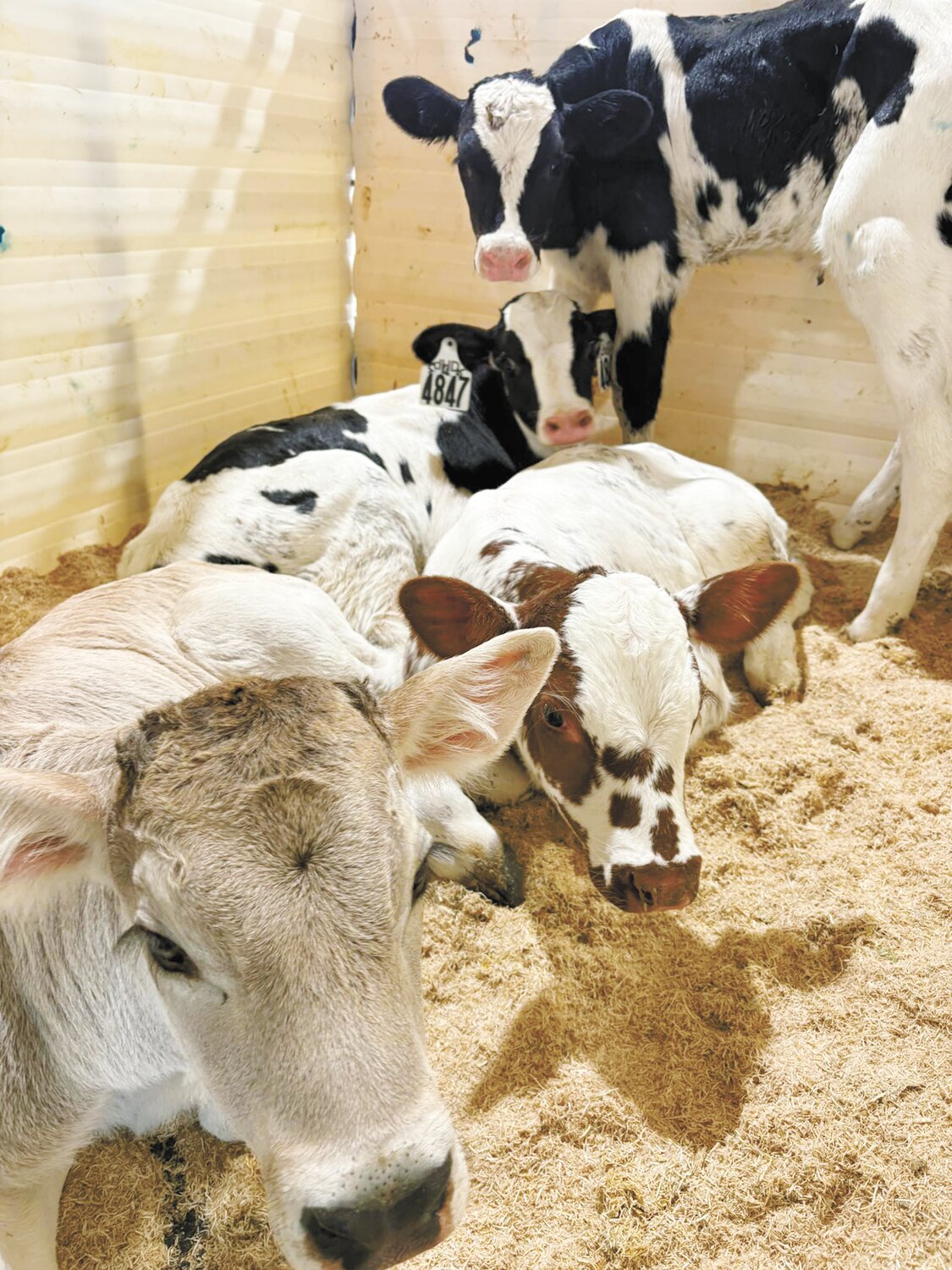
“We were losing over 50% of our calves at one point,” Den Hoed said. “That in itself is demoralizing, when you can’t keep your calves alive, losing one if not two or three calves every single day. It’s worse in the winter because their calcium transfer is horrible, and that is what keeps them warm. It’s all from the stray voltage. They’re conceived and in their mom for nine months that way, when they start out deficient, you don’t have a prayer. You can’t catch them up.”
The calf losses combined with the mortality and cull rates in their milking herd put the Den Hoeds in a predicament for keeping their cow numbers stable.
“We were buying heifers left and right; we probably bought close to 2,000 head, plus what we could raise,”
Den Hoed said. “We were trying to grow our farm, our business, but we couldn’t. We could hardly survive. You’d buy 50 heifers, and if you were lucky, you’d end up with 25. It takes a long time to crawl out of that hole. We came from a dairy that had enough heifers that we sold off the bottom 50% all the time.”
Meanwhile the Den Hoeds used land as a means to continue to keep their dairying operation afloat.
“We just kept farming more land, trying to grow,” Den Hoed said. “We were buying land for $2,000 an acre and making it worth $6,000 — drilling wells, improving our land so it was worth more — so we could keep borrowing. At a certain point you wonder where the end is.”
Once the Den Hoeds had determined the problem, it took them four years to get the electric cooperative to work with them to remedy the situation.
“We learned our farm is between two substations and stray voltage was coming up through the earth,” Den Hoed said. “We had unhooked the power off the line and we still had anywhere between two and seven volts in the dirt, coming through the farm.”
The two substations in question are 13 miles apart.
“We’re a big ground, we ground out the substations, that’s the problem,” Den Hoed said. “When you get such a large footprint between your manure storage and your barns, you have more grounding than a substation does and that’s where it wants to go. People are usually OK until they build a manure pit. If you place your manure pit wrong on your farm, in relation to the transformer, your well and distribution boxes, you can sink your farm.”
To compound their issues, the Den Hoeds were dropped by their milk processor when they started to put pressure on the electric cooperative for a solution.
“We were working with an independent stray voltage consultant and he warned us that would happen,” Den Hoed said. “He told us that they all borrow their money from the same place. We thought he was nuts for a while, but sure enough there started being discrepancies in our milk tests and we got a certified letter stating we had 10 days to find a new home for our milk.”
The past decade the Den Hoeds have learned the value of vigilance.
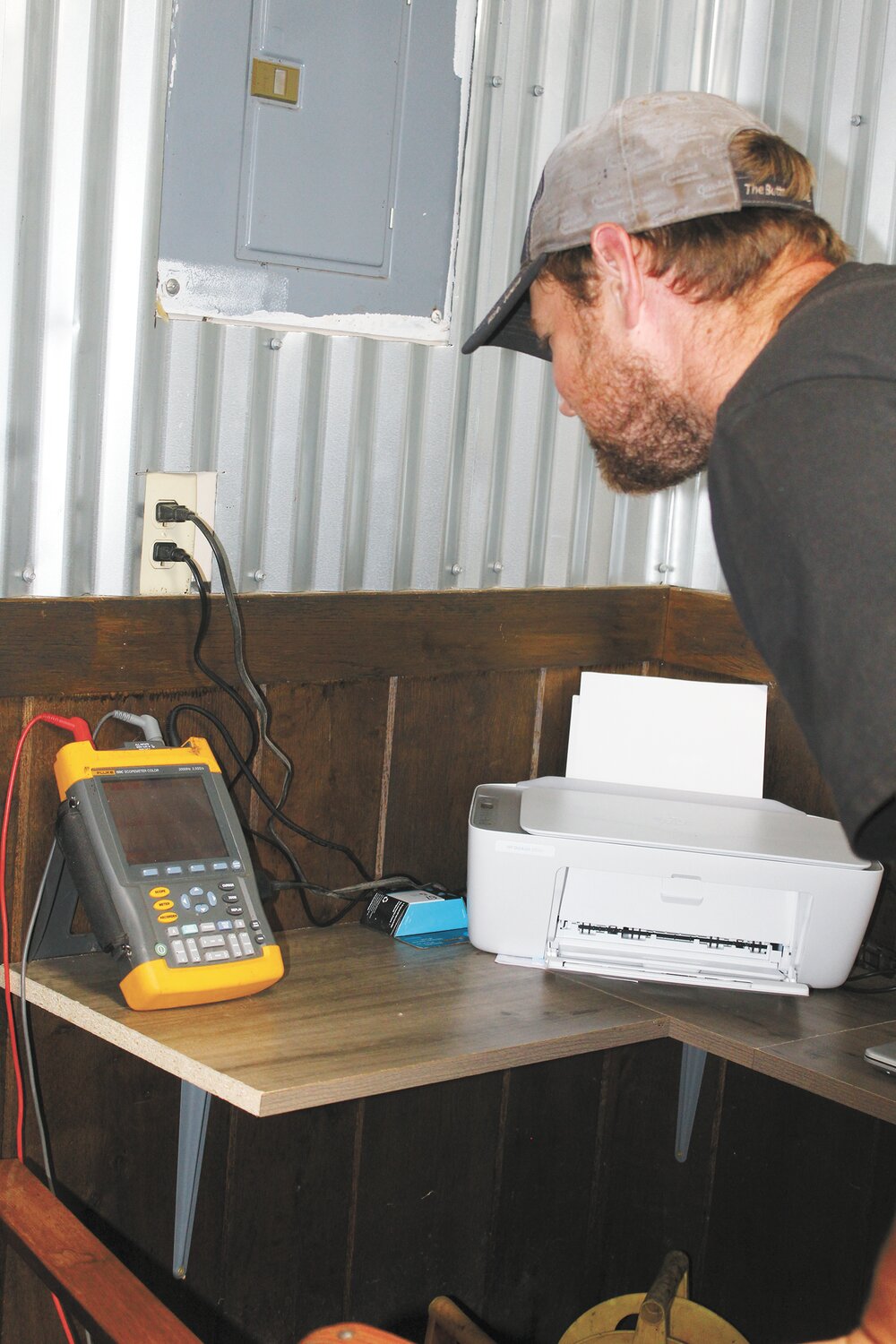
“We have a meter that measures 24 hours a day, seven days a week and we print it off so we know what our levels are,” Den Hoed said. “If we have something like a milk pump or compressor going bad, I can find it right away because it will start spiking. We will know if anything is awry.”
The Den Hoeds hope to regain some of the ground they have lost to stray voltage, as their herd average has climbed back to 80 pounds of milk per day.
“The question is, how long will the damage be with us?” Den Hoed said.
There is cellular damage to the cows, their longevity is cut and it is questionable what effects it has on calves in utero, Den Hoed said.
“What damage has been done to the DNA that they’ll pass on to future generations?” he said. “Will it ever truly go away? You just can’t out-manage it.”
The struggle affected the Den Hoeds emotionally as well as physically. But they have relied on each other as a source of strength.
“We’ve come a long way since the stray voltage, but it’s been a battle,” Den Hoed said. “In the midst of it, you feel like a failure. Having your faith is very important because that is what keeps you going. You start to internalize it. Staying strong as a family, fighting it together, that helps, too.”
 |
 |
 |
 |
Share with others


Comments
No comments on this item Please log in to comment by clicking here