




SWANVILLE, Minn. — Being able to lower electric bills and ease the financial burden was a goal for Capko Dairy Farm when they installed their first set of solar panels in November 2023. Two years later, they installed another four sets.
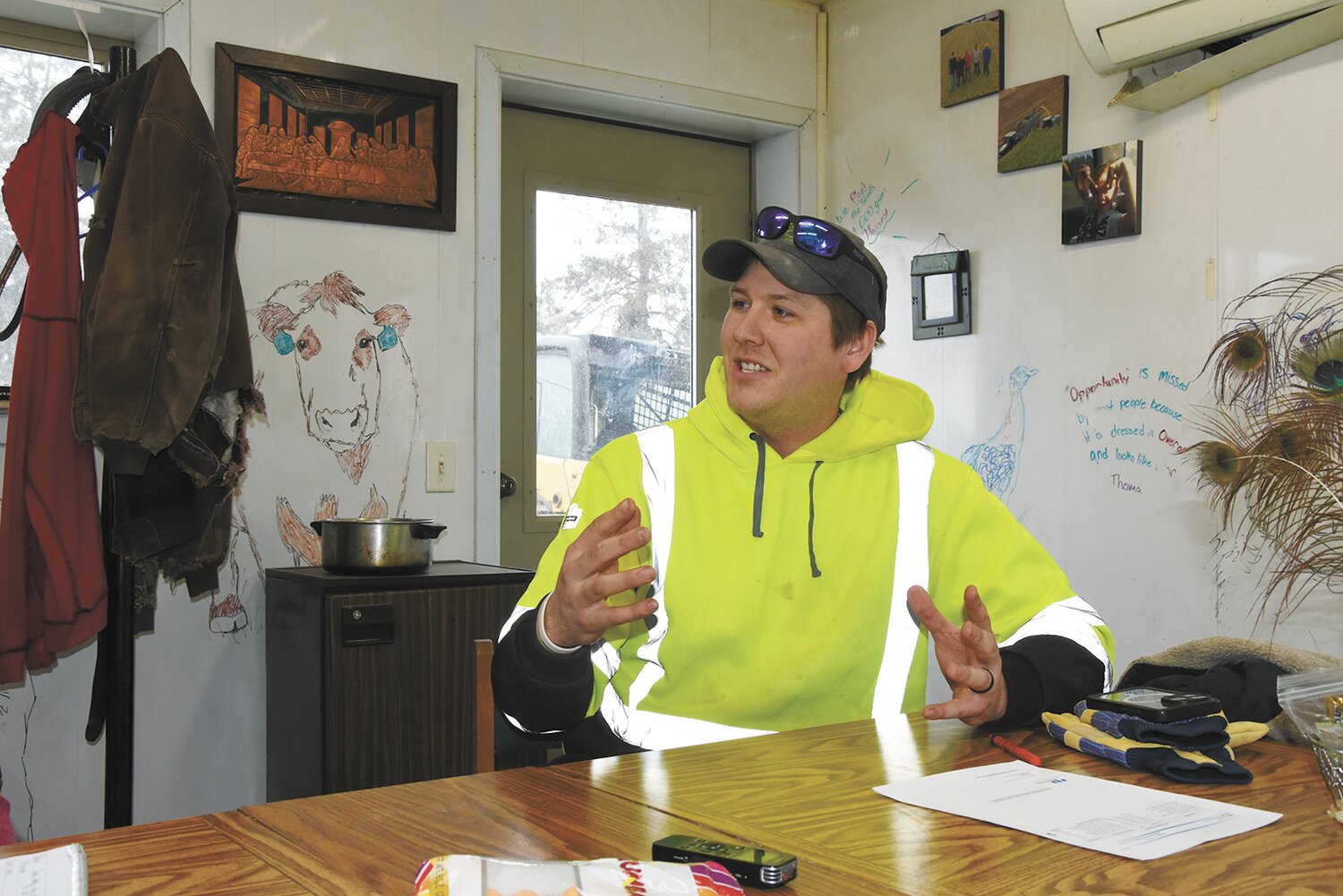
“(I’m pleased) that they’re working as advertised at this point,” Jared Capko said. “Things moved along and … have went well.”
Capko partners on the farm with his wife, Renee, his dad, Jerry Capko, and his uncle, Larry Capko. They milk 410 cows in a double-9 herringbone parlor and farm about 1,500 acres of land.
The first set of 500 panels, a 205-kilowatt system, was installed on the roof of their freestall barn, which is roughly 60- by 300-feet.
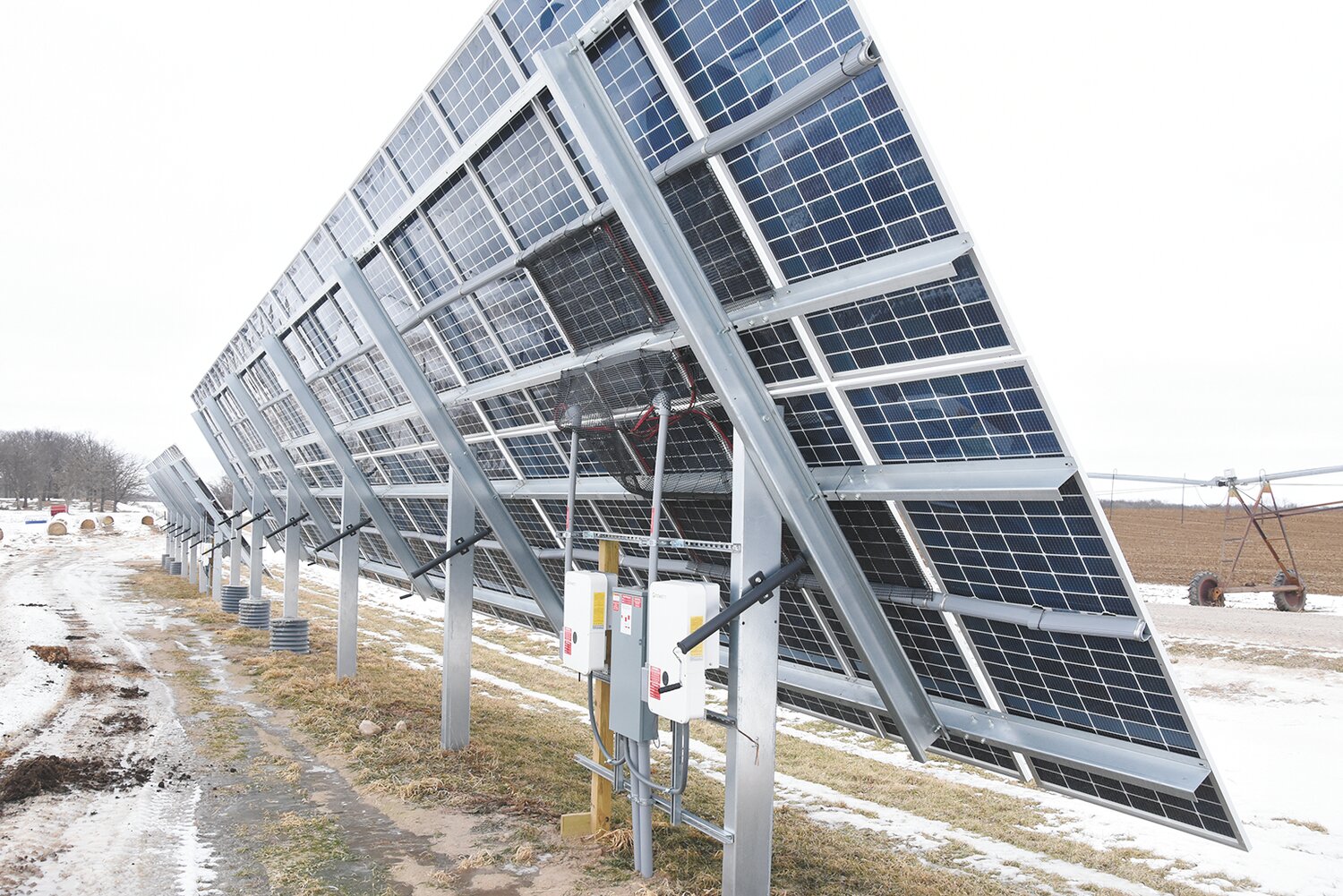
The second wave of panels had four sites with 92 panels at each site, each having a 40-kilowatt system. These panels were installed on the ground in places the family did not use as farmland: a ditch on the farm, a gravel pit, a steer facility and grassland by an irrigator. The four sites became operational in November 2025.
“The 5-year payback is probably the biggest (advantage),” Capko said. “You get them to pay for themselves and hope you can get a lot of life out of them after that. They say there’ll be degradation over time, but they give them a 25-year (lifespan). The warranties are 20-25 years between the inverter and the panels.”
As the sun beams on the solar panels, silicon cells inside each panel create a reaction and turn the energy into DC kilowatts, Capko said. From the panel, the kilowatts will be converted to AC kilowatts, which travel to the production meter, then to the farm meter. The solar panels on the roof use a microinverter, which is shared between two panels, but the ground solar panels use a string inverter that is shared among 23 panels.
Capko began researching the benefits and financial aspects of solar panels in 2022. From there, he reached out to various electrical companies for a better understanding. Capko said he visited with neighbors who installed solar panels to get their thoughts too.
For anyone interested in installing solar panels, Capko said he recommends doing as much research as possible, and talking to at least three electric companies.
Once they decided to pursue the panels, the Capkos debated whether they should put them on the freestall barn, the shop or the calf barn. However, the first set of panels all needed to be on one roof, so they put the panels on the freestall roof, since that is their biggest building.
They applied for grants and received 40% funding for the roof panels and 50% funding for the ground panels.
When they first filled out the grant for the solar panels, they roughly calculated the amount of power they would need based on their previous bills and installed enough solar panels for 80% of that.
“It didn’t take long for us to outgrow that,” Capko said.
At that time, they were milking about half the number of cows they are now and were only milking twice a day.
Prior to the installation of the panels, Capko also talked to the contractor about the sturdiness of the roof to make sure it was not too much weight for the structure to take on. The contractor was not worried about it because the weight is spread over a large enough surface area for each panel.
The panels on the freestall roof are fastened by a bracket, but the ground panels are held up by 12-foot posts that are roughly 10 feet apart. The posts are sunk about 6 feet into the ground. The angle of the panels mounted on the ground posts can be adjusted seasonally. During the summer, they are almost flat and, in the winter, they are angled for the snow to better slide off.
Being able to put panels on the roof allowed the Capkos to save space, but also came with some challenges. Capko said he has noticed the snow doesn’t melt off the roof panels as it does with the ground panels.
“In about a day, the snow will be melted off the ground panels, but the roof ones take about a week (depending on snow accumulation),” Capko said.
Even on a rainy day, the solar panels can still generate energy, Capko said.
The ground-mounted panels are bifacial, so they gather sunlight from the front and the back of the panel. They can gather up to 40% of their energy from the back of the panel, Capko said.
“In the summertime, they should supply enough electricity to run the irrigator,” Capko said.
This depends on irrigator use, however, as some years Capko said they run it a lot.
“(One) system we use has two wells that used 70,000 or 72,000 kilowatt hours for the year, which is about what one of those (solar panel) systems will make in a year,” he said.
The solar panel systems are rated for about 65,000-70,000 kilowatt hours a year, Capko said. Whatever they do not use gets credited on their regular bill.
Capko estimates the solar panels cover 20%-40% of their electric bill in the winter and 60%-80% in the summer. Capko gets a monthly summary with his bill and can also check online, but there is a 24-hour lag.
“When you first get into it, you check it quite a bit,” Capko said. “You want to keep checking it to make sure everything’s still working. At this point, it always has, but a breaker could trip or something could happen and you don’t want to miss out on a month.”
With the additional solar panels, Capkos will continue to produce electricity for their electrical bills. Capko said his dad was all for the change to try something new and his uncle was happy to see the electric bill go down.
 |
 |
 |
 |
Share with others


Comments
No comments on this item Please log in to comment by clicking here