
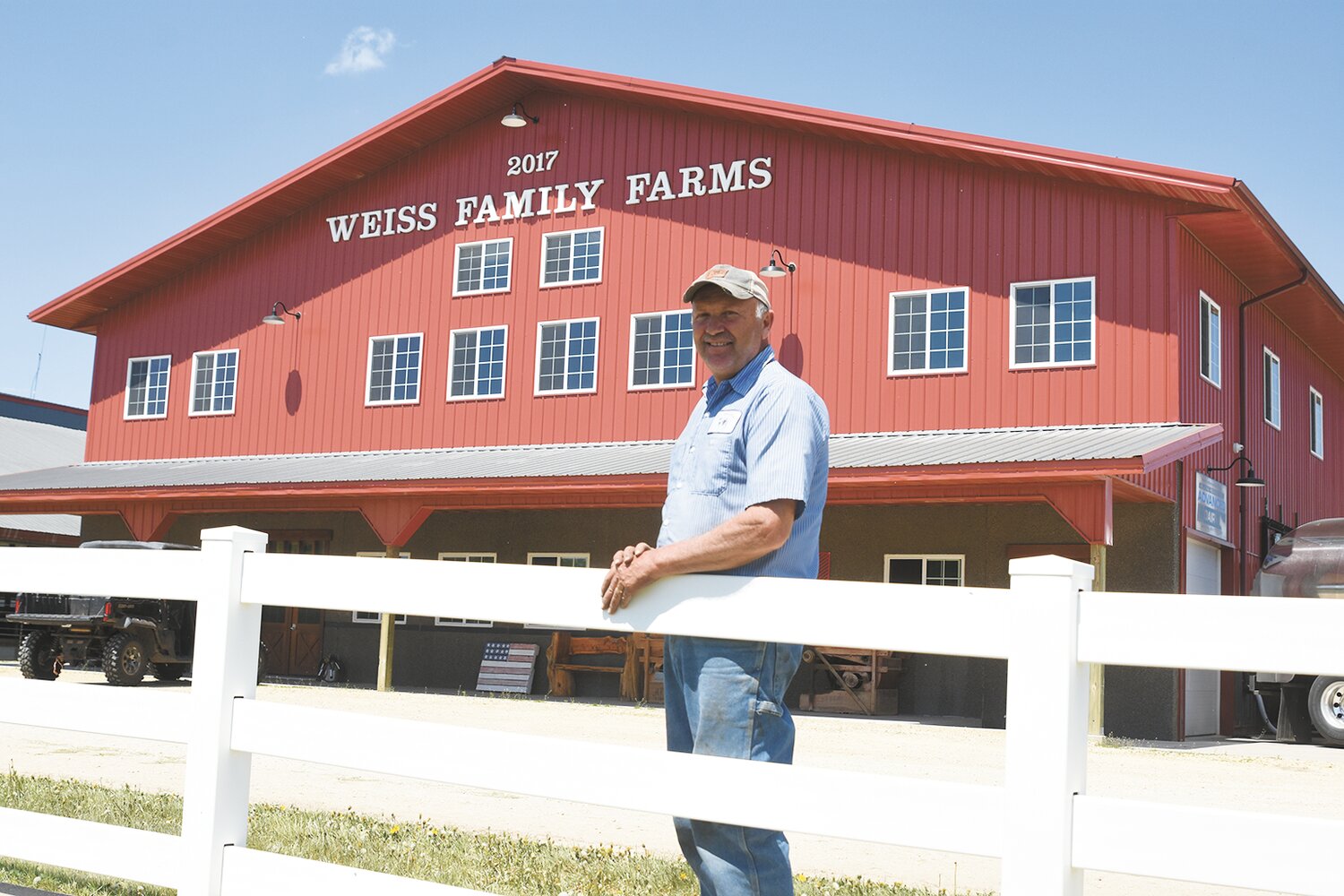
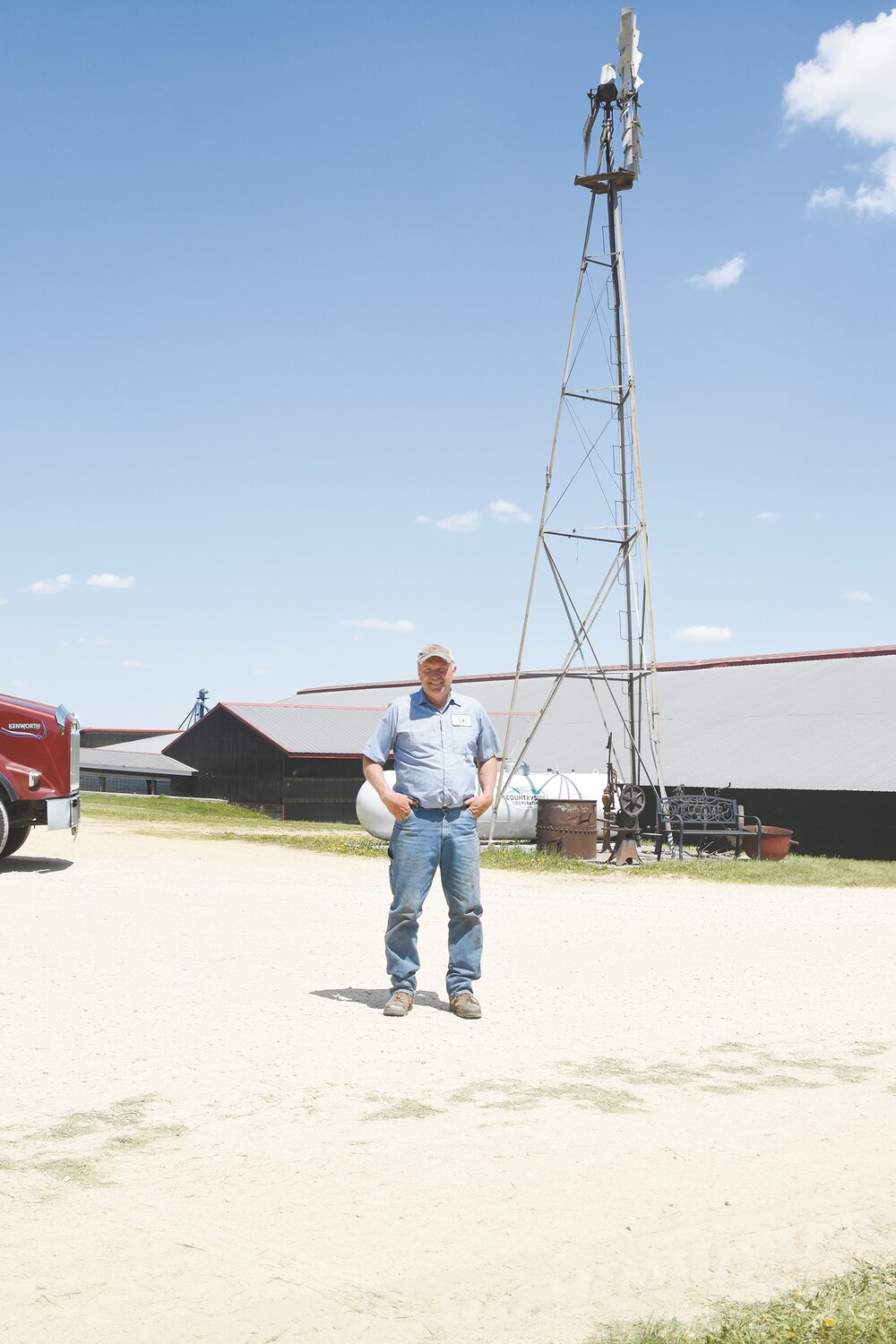


DURAND, Wis. — When Don Weiss received the Wisconsin Master Agriculturalist award, he was taken aback. Despite running a 2,300-cow dairy near Durand, his operation is still seen as a family-run cornerstone of the community. Known for strong conservation practices and active church volunteerism, Weiss’ quiet leadership has made a lasting impact beyond his fields.
“(When) you look at the history of this award and who has gotten it, we respected those people and you respected their farms,” Weiss said. “It makes you feel proud that you’re part of that group now.”
Weiss Family Farms began in 1881. Weiss still holds the original deed of sale, indicating that his grandfather bought it from his great-great-grandfather, not for cash, but rather a trade of cows, firewood, dozens of eggs, and oats and hay for the horses. In 1985, Don, along with his brother, Dan, took over the farm from their dad, starting with 160 acres and 54 cows. Over the past 40 years, the farm has continued to grow as a family business.
Weiss was one of four to earn the Wisconsin Master Agriculturalist award in 2025, joining Ron Brooks of Waupaca, Jeffery Kennicker of Cuba City and Bob Mitchell of Wauzeka. The award dates back 95 years and honors farmers for their hard work, dedication, farming success and exemplary leadership.
Weiss leads his community in a variety of ways. He was one of the founding members of a watershed group and was a participant in the Conservation Reserve Enhancement Program. He continued the family’s work with cover crops, adding buffer strips to drainage ditches and installing lysimeters and grassed waterways.
Conservation is something Weiss and Weiss Family Farms are cognizant of and have done their best to be at the forefront of such practices. Weiss and his farm have used cover crops for more than 20 years. They took what they learned from the CREP program and continue to use it on their land today.
“Every farm is different, so what we do might not work for everyone,” Weiss said. “But we want to show everyone why conservation is important, even if you don’t get paid to do different conservation practices.”
When Discovery Farms was looking for land to install a new lysimeter in Pepin County, few were eager to jump at the opportunity, but Weiss did.
Lysimeters are devices that isolate the volume of soil between the soil surface and a given depth and include a percolating water sampling system at their base. Its goal is to measure the exchange of soil water between a sample of soil enclosed in an open-topped container and the unenclosed soil that surrounds it.
“We had them install the lysimeter because we knew it was the right thing to do,” Weiss said. “They wanted to put one in the area, and no one was volunteering, so we decided we would take it on. They just needed someone to give them a chance.”
Off the farm, Weiss is on the board of directors for the Nelson Telephone Cooperative and volunteers at his church, Holy Rosary Catholic Church in Lima, just two miles from his farm. There, Weiss is on the finance committee and the fall festival committee, is a rosary leader, and helps with the fish suppers during Lent.
“I’m very connected with my church,” Weiss said. “The partnership on the farm split in 2010, and I remember when we left the lawyer’s office thinking that we were going to be in debt for the rest of our lives. After that day, I asked my mom to teach me how to pray the rosary and I prayed it every day, and my faith took a new focus for me.”
At the time of the split, Weiss Family Farms was milking 700 cows, with 1,000 acres for crops. Currently, the farm is milking 2,300 cows with nearly 4,000 acres of cropland.
“We’ve been rewarded with so much,” Weiss said. “The good Lord has blessed us.”
With the installation of a 50-cow rotary parlor in 2017, Weiss Family Farms has seen its number of milking cows increase, but the farm is still a family-run enterprise. Weiss and his sons, Nathan and Noah, are still the ones in the barn every day.
“We do most of the day-to-day jobs,” Weiss said. “We hire some of the field work out, but when it comes to the animals, we feel they are the most important part of our business. If it isn’t done right, we’re the ones who are going to suffer. There’s a different level of pride for that when your name is on the barn.”
The current amount of cattle was not the initial goal for the farm when Weiss started, but he has found that with an increased number, there has been more time for family and flexibility.
“When we built our first barn at 250 cows, we thought we were going to milk them, do all the feeding, do everything and after a while, I realized I didn’t have time for my family,” Weiss said. “When people would say we had good kids, I would thank my wife because I wasn’t there to raise them.”
With the sixth generation playing an active role on the farm in Weiss’ sons, Weiss hopes that the conservation values he has instilled, along with the increase in herd size, can set Weiss Family Farms up for a successful future for generations to come.
“That’s why we continue to push forward and add,” Weiss said. “Being bigger has also led us to being more efficient. It allows us to take a day off.”
With added efficiency, Weiss Family Farms is in a good position to continue to lead the dairy industry. Awards are a nice reminder of the progress made, but no matter how many awards the farm gets, Weiss wants his legacy to be remembered by more than the farm.
“No matter the awards, or where Weiss Family Farms goes, I know my greatest accomplishment was my family,” Weiss said.
 |
 |
 |
 |
Share with others


Comments
No comments on this item Please log in to comment by clicking here