
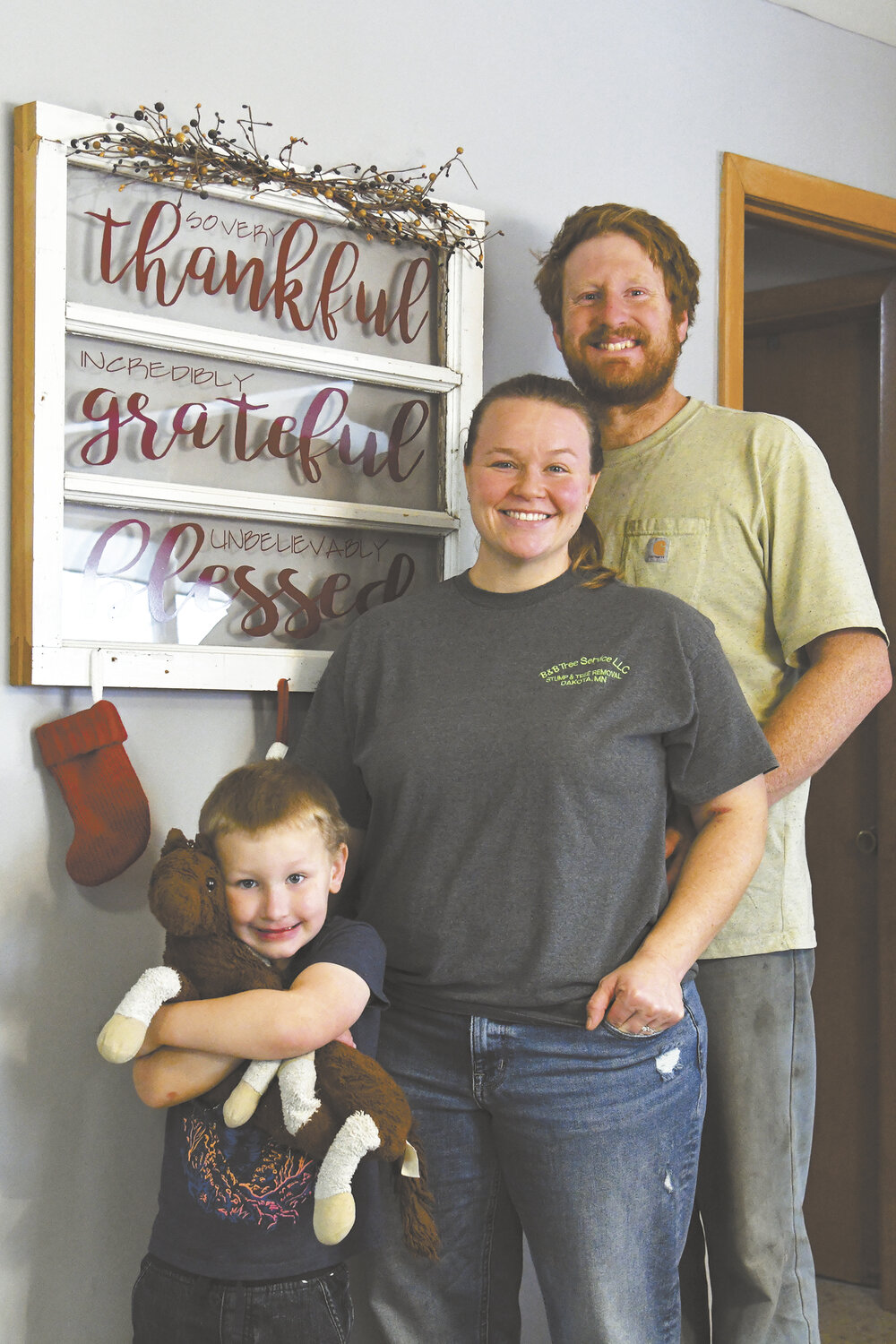


HOUSTON, Minn. — When Tony and Rihana Hackbarth were forced to sell their milking herd in 2013 as a result of Tony’s parents’ divorce, their dream to milk a herd of organic cows remained.
“We weren’t ready to quit,” Tony said. “It wasn’t our choice to stop milking. It was just circumstantial. In the back of our minds, we had always hoped to get back into it. Especially grazing and going towards organic.”
This summer the couple sold organic milk for the first time in July. The couple milks a mixed-breed herd of 40 cows alongside their elementary-aged son, Alvin, and they are expecting a baby in May. In addition to dairy farming, the couple rents a second farm, raises steers, and grows vegetables that they sell at several wholesale markets.
All the crop acres on their home farm can be grazed. Between their farms they raise enough organic forage to cover about 50% of their stored forage needs. This year, they grazed their herd until Nov. 1.
“Grazing has been at the heart of our dairy regardless of where it was or how it looked,” Tony said. “Grazing has been first and foremost to us.”
The Hackbarths farm without outside help. Tony left his full-time job in October 2024, and Rihana has cut back to 16 hours a week off the farm. Family time is one of the couple’s favorite parts of farming.
“We’re all out here together doing it,” Rihana said.
Tony agreed.
“I want our family to come away with the values of farming: the hard work, the patience, the learning how to want,” Tony said.
After their original dairy dream was shuttered 12 years ago, the Hackbarths saved back their heifers, rented space to house them and bred them to beef. In 2020, they purchased their 80-acre farm in the bluffs near Houston.
They bought their farm from a retired family that had dairy farmed and wanted to help the next generation.
“They said, ‘Here’s your opportunity,’” Tony said. “That’s something that doesn’t happen a lot, so we’re grateful.”
At the time of purchase there was no available milk market. In 2021, things changed and their first milk check came from a herd of 14 cows milked in Surge buckets.
Tony’s father, grandfather and great-grandfather were all dairy farmers, but Tony said owning his own farm site and restarting from scratch has given him more of a first-generation mindset. One family legacy on the farm is that some of the cattle are descendants from his dad’s herd, which had been sold to an extended family member.
The Hackbarths started transitioning the herd to organic in 2024, following the cropland transition which began in 2022. They said this was fortuitous timing. They had good heifer numbers, conventional pay price was decent to support the costly transition, and the price of organic corn and hay were down.
The Hackbarths said switching to organic paralleled their grazing philosophy.
“If we didn’t have the organic market, we wouldn’t be doing anything any differently,” Tony said.
He said he appreciates how the organic market promotes their product, gives a stable pay price and uses supply management.
“Those are three big areas of opportunity that the conventional market doesn’t always handle,” he said.
Tony said being organic requires him to be in tune with the natural cycles of his herd, hay, soil and the earth.
“Production is going to be a lot more dependent on the seasons,” he said. “With being organic, we don’t have some of the tools, like some of the different feed stuffs (of conventional farming).”
The Hackbarths give their cows a section of fresh pasture every 12 hours. Their current pasture is divided into 16 paddocks, varying in size from 1-12 acres. Next summer, they want to redo their pastures to have more paddocks and a lane system to eliminate back grazing and support pasture recovery.
The biggest challenge of transitioning to organic has been feeding calves, the Hackbarths said. This summer they had issues with coccidiosis and other diseases affecting calves later in the milk stage. Rihana said they had to reevaluate their protocols to be proactive versus reactive.
Conversely, their somatic cell count has gotten better since switching to organic, the Hackbarths said. They rarely have mastitis, and they culled their chronically high SCC cows. Tony said he hypothesizes the more natural feedstuffs they are required to use as organic producers has contributed to the good health.
The couple out-winters their cows, only bringing them into their 47-stall tiestall barn on the most bitter days. To support the cows, they provide deep bedding and use extra bale feeders so the cows are not competing for feed.
“They have to have the highest quality feed available all the time, because they’re little digesters,” Tony said. “They are little bioreactors that keep themselves warm, but they have to have their rumen full to do that.”
Breeding-age heifers are part of the milking cow group. The Hackbarths said the heifers would receive the same diet as the cows regardless, and it is easier to feed one big group versus two smaller groups.
The Hackbarths calve year-round, although they avoid calving from mid-December through mid-March, with their biggest calving months being April, May and June. Limited housing is one of the reasons for year-round calving as is milk production variability.
Right now, the Hackbarths want to increase their herd and find the right number of cows for their farm.
“We haven’t hit that yet,” Rihana said. “Neither one of us has felt like, ‘Oh man, we’re milking too many.’”
As the Hackbarths look to the future, they said they hope to create a sustainable operation.
“We don’t want to force anyone into our life choice,” Tony said. “We want to make farming enjoyable and attractive the way it was to us.”
Tony said what drew him to farming was the lifestyle and community. The couple cred-its mentors inside and outside the grazing community for supporting their journey.
As a young farmer, Tony said he wants to see other young people also supported in their desire to farm.
“There was a period of time in there where people really discouraged young people from getting involved in agriculture,” he said. “Those same people who did that sit at the coffee shop and say, ‘Oh, I can’t believe there’s no farmers around.’”
Tony’s advice is different.
“My message to people is, ‘It is OK. If you want to farm, go do it,’” Tony said.
 |
 |
 |
 |
Share with others


Comments
No comments on this item Please log in to comment by clicking here