
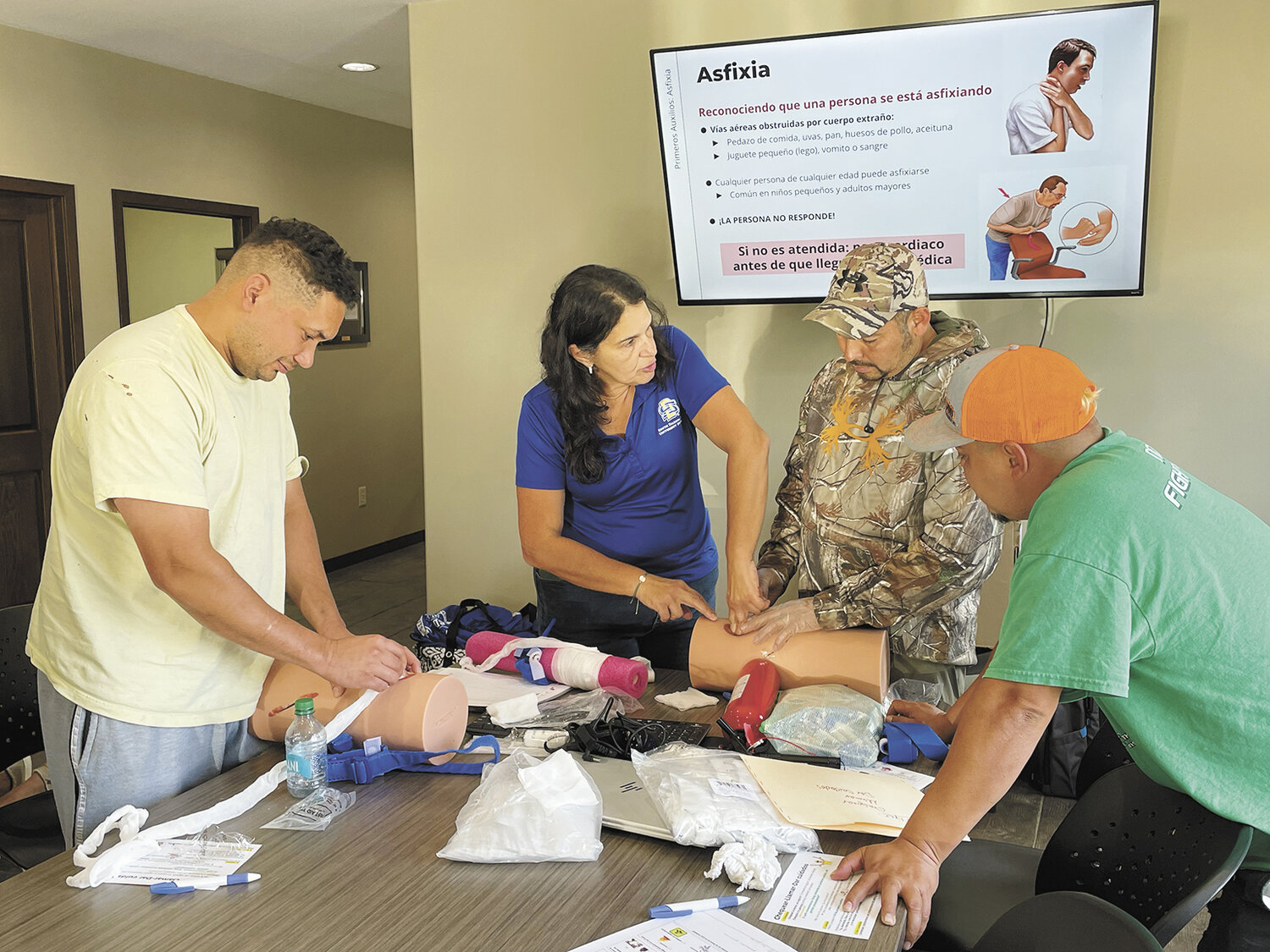


BROOKINGS, S.D. — Dr. Maristela Rovai, an associate professor and extension dairy specialist at South Dakota State University, saw a need for dairy farm safety training — specifically within the Latino workforce — and she is working to meet it. Rovai was inspired to provide safety training after visiting dairy farms where she noticed that most of the Latino employees could not read English and 25% had vision problems, including colorblindness.
With grant funding from the High Plains Intermountain Center for Agricultural Health and Safety, Rovai and Dr. Patricia Villamediana, a former SDSU dairy field specialist, have been able to complete 10 farm training presentations with 200 employees. The farms that participated were in Minnesota, Iowa and South Dakota, representing approximately 35,000 lactating cows in the I-29 corridor.
Rovai is originally from Brazil. She earned her doctor of veterinary medicine in Brazil and completed a master’s and a Ph.D. degree from the Autonomous University of Barcelona in Barcelona, Spain. After traveling the world working with people and large animals, Rovai accepted the position at SDSU.
“It is my dream that came true,” Rovai said. “To work in a university setting while collaborating hand-in-hand with producers in real-life situations is a true, blessed gift. I get to bridge academic research with practical, on-farm applications and work with employees to solve real problems. This kind of direct collaboration benefits everyone — the animals, the producers and the community.”
The training sessions Rovai and Villamediana did were either two 1.5-hour sessions or one 3-hour session. Each training presentation was tailored specifically to the farm.
“We audit the farm first to see all the aspects related to health and safety and talk to producers and employees,” Rovai said.
The audits included key areas, like fuel and chemical storage, handling practices, safety risk assessment like sharps disposal, machinery, electrical systems, manure management, fire extinguishers and first aid stations.
Rovai updated the training materials for each session with images and protocols from the specific farm.
“They need to know where the fire extinguisher is and if it is expired or if the chemical solutions have been diluted properly and are being used safely,” Rovai said. “If they call 911, they need to talk to someone who can speak Spanish. If they are in an urgent situation, there is no time to wait for an interpreter.”
Rovai said safety training includes teaching workers how to pronounce the name of the farm they work on. The producer should also post the address of the farm, and the employees should be shown where that address is posted.
The general safety training Rovai does teaches employees the aspects of the farm they do not know, such as the dangers of the manure pit and lagoon; electrical hazards; chemical spills; proper storage of farm materials to avoid accidents; and key hazards, including animal handling, biosecurity measures and zoonotic diseases.
Rovai even presents about the type of rubber boots to wear for proper grip on wet floors or in the cold winter. Also, proper washing around electrical sources is considered.
Rovai said Latinos who immigrate, grew up in a world using kilograms and milliliters, while Americans use quarts and gallons. Because of this, she explains how to use conversions of chemicals and dilutions. These tasks can be difficult for employees because safety protocols on chemicals and warnings on equipment are typically written in English.
Personal protective equipment is discussed as well. Rovai said employees wearing protective eyewear in the parlor is important to keep eyes safe. As well, they should keep their soiled clothing at the farm instead of taking it home to their children or roommates. Employees should also keep the bathrooms clean to decrease the spread of germs.
Rovai and Villamediana have obtained Train-the-Trainer certifications from the American Red Cross, the American College of Surgeons Stop the Bleed program and fire safety programs. Their hands-on training delivered in Spanish is available to teach employees how to apply a tourniquet, perform CPR, handle choking situations and use a fire extinguisher safely.
“The producer or manager cannot be available every second at every part of the farm, so it is very important to train employees as a team,” Rovai said.
Rovai said the safety culture of the U.S. is often different from the home countries of employees. She said once properly trained, it is the employees’ responsibility to protect themselves as well as properly care for the facility, the equipment and the cows.
Rovai and Dr. Noelia Silva del Rio of the University of California, Davis have been approved for a second grant with the SDSU Extension and the AgriProspects Workforce Development Network. English and Spanish training videos will be produced to go into more detail about manure safety, cow handling and biosecurity, among other important topics. The 5-minute videos can be played in break rooms or shared on WhatsApp with employees. By creating videos, the pair are hoping more employees will have a chance to review the safety procedures.
Dairy producers who would like to participate in a training session can sign up for safety training by contacting SDSU Dairy Extension. To make it more accessible, Rovai said she can schedule the training to optimize attendance for each farm.
 |
 |
 |
 |
Share with others


Comments
No comments on this item Please log in to comment by clicking here