
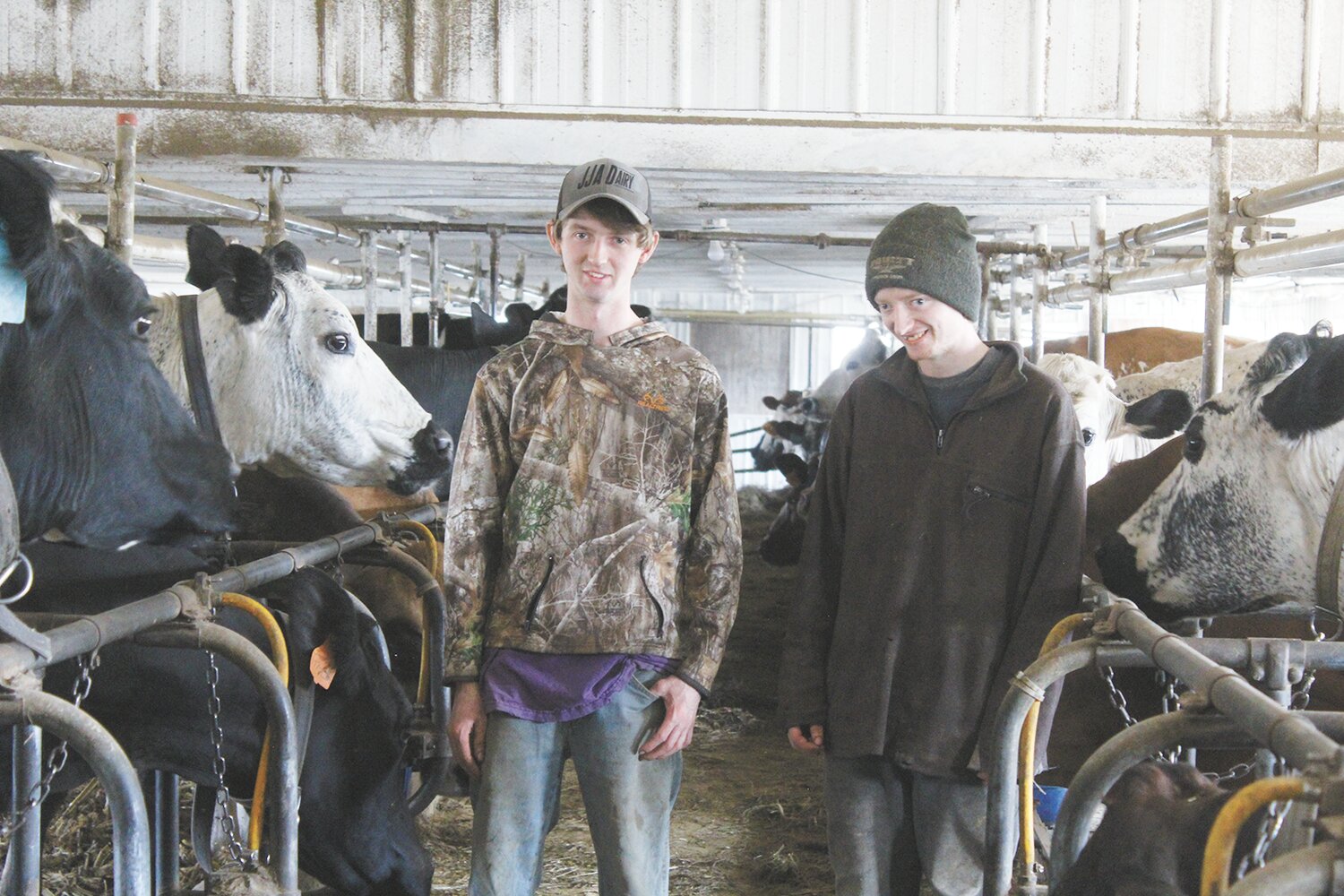


CHETEK, Wis. — There is nothing Jacob Francois can imagine doing, other than continuing as the fourth generation of his family’s dairy farm.
“I grew up here in this barn,” Francois said. “My mom had me in the barn with her when she did chores. It’s the only thing I’ve ever known, and honestly, even though it’s tough sometimes, I wouldn’t want to do anything else.”
Francois milks 60 cows at JJA Dairy near Chetek, with help from his brother, Joseph. The milk is shipped to Associated Milk Producers Inc. Francois took over the farm in 2021, following the untimely death of his mother, Maria Francois.
“I was pretty much just out of high school when my mom died,” Francois said. “She had started way back when she was 16 or 17; she had a couple of different farms when she was young. I just grew up doing it, right alongside her.”
The farm was originally his great-grandfather’s.
“When mom died, it felt really important to me to keep this going,” Francois said. “I knew I probably wouldn’t be happy trying to work in a factory or some kind of job like that. I like being my own boss and not being told what I need to do. The cows, this way of life, it’s too much in my blood.”
The herd is an eclectic mix of breeds, which is a point of pride and joy for the young dairyman. The herd includes standards like both red and black Holsteins, Jerseys, Guernseys, Brown Swiss and Milking Shorthorns. In addition to those breeds, Francois has Dutch Belted, Normandes, Fleckviehs, Linebacks and blue roan cows.
“I do love my colored cows,” Francois said. “The more and different, the better I like them. The blue roans are some of my favorites. I just think the color and their markings are cool. They’re different, and you don’t always see a lot of them around. The blue linebacks are pretty special, too.”
The herd is bred primarily using A.I. Francois said it can be a challenge to find bulls that will produce the colors and patterns he likes best.
A herd favorite — a crossbred cow named Grandma —died at 20 years old in February. She had 12 calves — six heifers and six bulls — over her lifetime. Francois said the day she died was particularly rough. His current favorite individual cow is a Dutch Belted cow that he said is easy to work with and care for.
“I think sometimes the cows are easier to get along with than some people,” Francois said.
Francois raises his own replacement heifers for the herd. All cows in the herd are bred once to produce a potential replacement heifer calf. Francois has been selecting bulls with more milk to help increase the productivity of his herd. To do this, he has been using more Holstein genetics recently, even if it means possibly forgoing some of his favorite color patterns.
If a cow comes back into heat, she is then bred using beef semen. The heifers are all bred using beef semen, as well. That protocol gives Francois a supply of black calves to market, providing an additional revenue stream for the farm.
“It’s pretty hard not to try and take advantage of that black calf market right now,” Francois said. “It makes a big difference in our bottom line.”
Though Francois has a passion for dairy farming, it does not make it easy to continue to soldier on, Francois said.
“We almost made the decision to sell out this winter,” Francois said. “With milk prices being as low as they are and cow prices being as high as they are, it’s tempting right now. But I just can’t really imagine doing it. So as long as I can, I guess I’ll keep it going.”
Aside from his mother’s death, the biggest challenges Francois said he has faced in his fledgling dairy career are low milk prices, coupled with high input prices.
To help keep his farm going, Francois works off the farm, trucking cattle for Equity Cooperative four days a week.
“It’s nice to be out trucking,” Francois said. “You get away from the farm for a bit, you get to see some people and some countryside.”
He said he is looking forward to warmer weather and the grazing season that comes along with it.
“The cows go out mornings and nights,” Francois said. “Summertime chores are a lot easier, and it’s nice to be able to see the cows out on grass. My cows just seem to do better when they can be outside.”
Francois’ farm is all pasture ground, so he purchases all his feed and hauls manure to his grandfather’s fields. The cows have a pasture with a wooded area for daytime grazing and a pasture closer to the buildings where they spend their nights.
For the time being, Francois plans to keep the status quo for the farm.
“I’m just taking things day by day,” Francois said. “It’s hard to really make plans or set goals the way things are right now. I guess my goal is to keep going and hope things start to get better. Then maybe we can start to make plans to do some new things.”
 |
 |
 |
 |
Share with others


Comments
No comments on this item Please log in to comment by clicking here