


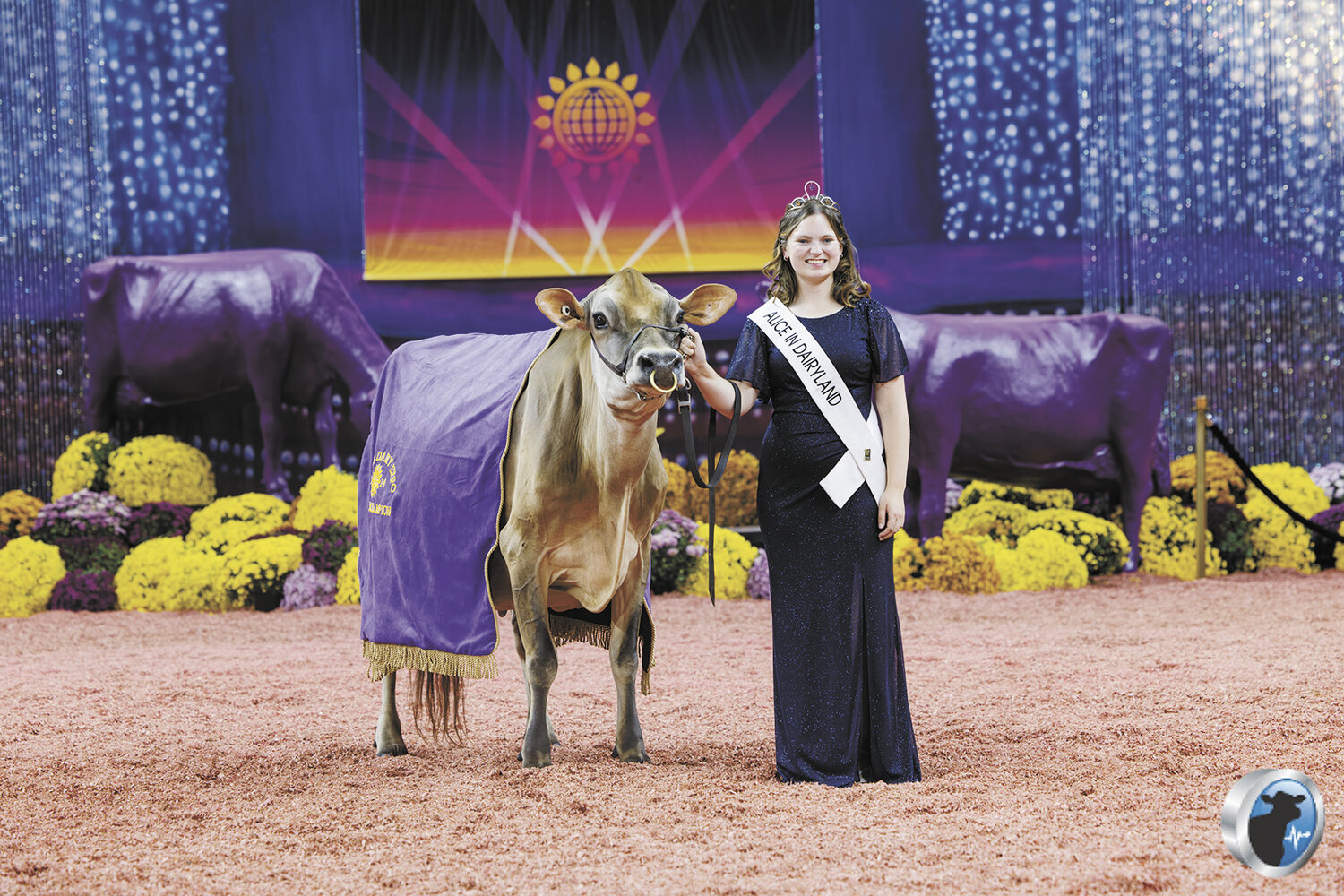


MADISON, Wis. — For over three-quarters of a century, Alice in Dairyland has been an iconic representative of everything agriculture in Wisconsin. Another chapter of the Alice history book will begin May 17 as Wisconsin’s 78th ambassador of agriculture will be named in Prairie du Chien.
“Alice is a unique position, a unique name that has endured for so many years because it does what it was designed to do,” said Lisa Behnke, who served as the 38th Alice in Dairyland, selected in 1985. “Alice gets attention and holds that attention. The role allows you to tell people a great story about where their food comes from. I hope we’re still naming Alices for another 78 years.”
The role has evolved over time, from a high school beauty queen to a professional communications and marketing specialist. But, the core remains the same: sharing the story of Wisconsin agriculture with new audiences.
Halei Heinzel is serving as the 77th Alice, a role she will continue until July 1, when the newly selected Alice will assume the title.
“The uniqueness of being Alice is getting to do so many different jobs, in one role in a single year,” Heinzel said.
Outside of traditional public appearances, media interviews and classroom visits, Heinzel said Alice has fully embraced social media, growing the presence to over 21,000 followers on Facebook and Instagram.
“Many of those 21,000 people are not located in Wisconsin,” Heinzel said. “We have people from around the world tuning in and learning about Wisconsin agriculture. We’re reaching a global audience without ever leaving the state.”
Debbie Crave, the 34th Alice in 1981, said the responsibility of communicating on social media is probably one of the biggest changes in Alice’s role over time.
“Serving as Alice is a lot of hard work, you are always on — always expected to be focused and relevant,” Crave said. “I believe the job would be even harder now with the advent of social media and cell phones. We’ve always had a great story to share using traditional media, now there are so many more avenues available to capture that audience.”
Behnke agreed.
“I look at what Alice is doing now, pushing out social media content,” Behnke said. “She is always in reporter mode. I admire the strength and endurance they have.”
Finding the right person to fill the role of Alice has changed over the decades. Initially, the selection of Alice began by narrowing the field of contestants to 16 young women based on photos alone.
Today the application is rigorous, detailed and not based on pictures. Once the field of applicants is narrowed to a group of as many as six top candidates, an intense 2-month job interview ensues. Candidates begin the task of immersing themselves in Wisconsin agriculture while showcasing their communication talents.
“The core of the job hasn’t changed over the years; it’s always been a sophisticated position,” Behnke said. “You’re acting on behalf of the Wisconsin Department of Agriculture, Trade and Consumer Protection. That the state would allow Alice to speak on behalf of the department is a remarkable responsibility, and the training is phenomenal. It’s a shame everyone can’t walk in Alice’s shoes for a year, because you cannot imagine the wealth of knowledge and pride that is shared with you.”
The story Alice has shared has grown to include many more facets of Wisconsin’s agricultural industry.
“It’s amazing all the different topics Alice might talk about, agriculturally, now,” Crave said. “We probably didn’t talk about nursery trees or some of those industries we hear promoted now. They’re all a great story for our state.”
The duty to learn that story is immense, Behnke said.
“It was such a learning experience, trying to be the best sponge you could be,” Behnke said. “(It was) not just soaking all that knowledge in, but figuring out how to package it and put it back out so you retain the same enthusiasm and absolute love for the subject as the people who initially shared it with you.”
One piece of the Alice program that has not changed is the time put forth to communicate the value of Wisconsin’s agricultural industry.
“Alice used to be quite the globetrotter; she even had her own private jet,” Heinzel said. “In the early days, Alice spent most of her time outside of the state, in places like Hollywood and New York City, meeting famous people and presidents. Most people living in Wisconsin then were connected to the dairy industry — they didn’t need to be told how great Wisconsin cheese is. Today, most people are four generations removed from the farm.”
Alice still racks up the miles, Heinzel said, mostly zigzagging the highways and back roads of the state.
“I’ve driven 33,500 miles by the end of April,” Heinzel said. “I’m hoping to hit 50,000 by the time I’m done. I think I’ll have a pretty good chance, attending many of our great dairy breakfasts across the state in June.”
During her year as Alice, Crave still traveled around the country to several events representing Wisconsin agriculture, experiences she said opened her eyes to new things.
“At one event in New Orleans I was in a crawfish eating contest,” Crave said. “I never knew crawfish as anything but something in the lake, under the pier. I really didn’t know anything about Cajun food, but it was fun to experience that and get a little taste of New Orleans.”
While Alice is a job, the woman holding that position becomes Alice, Behnke said.
“For one year, you commit that you are going to be Alice, you kind of drop your own identity and you become the spokesperson,” Behnke said. “As the job evolves, so do the people who hold it. They each put their own stamp on it.”
Heinzel said embracing the role and infusing her personality into it has been gratifying.
“The best part of Alice is that she is a different person every year,” Heinzel said. “There is no mold to the perfect Alice in Dairyland. Each one is different. It’s all about her sharing her unique story in agriculture.”
 |
 |
 |
 |
Share with others


Comments
No comments on this item Please log in to comment by clicking here