

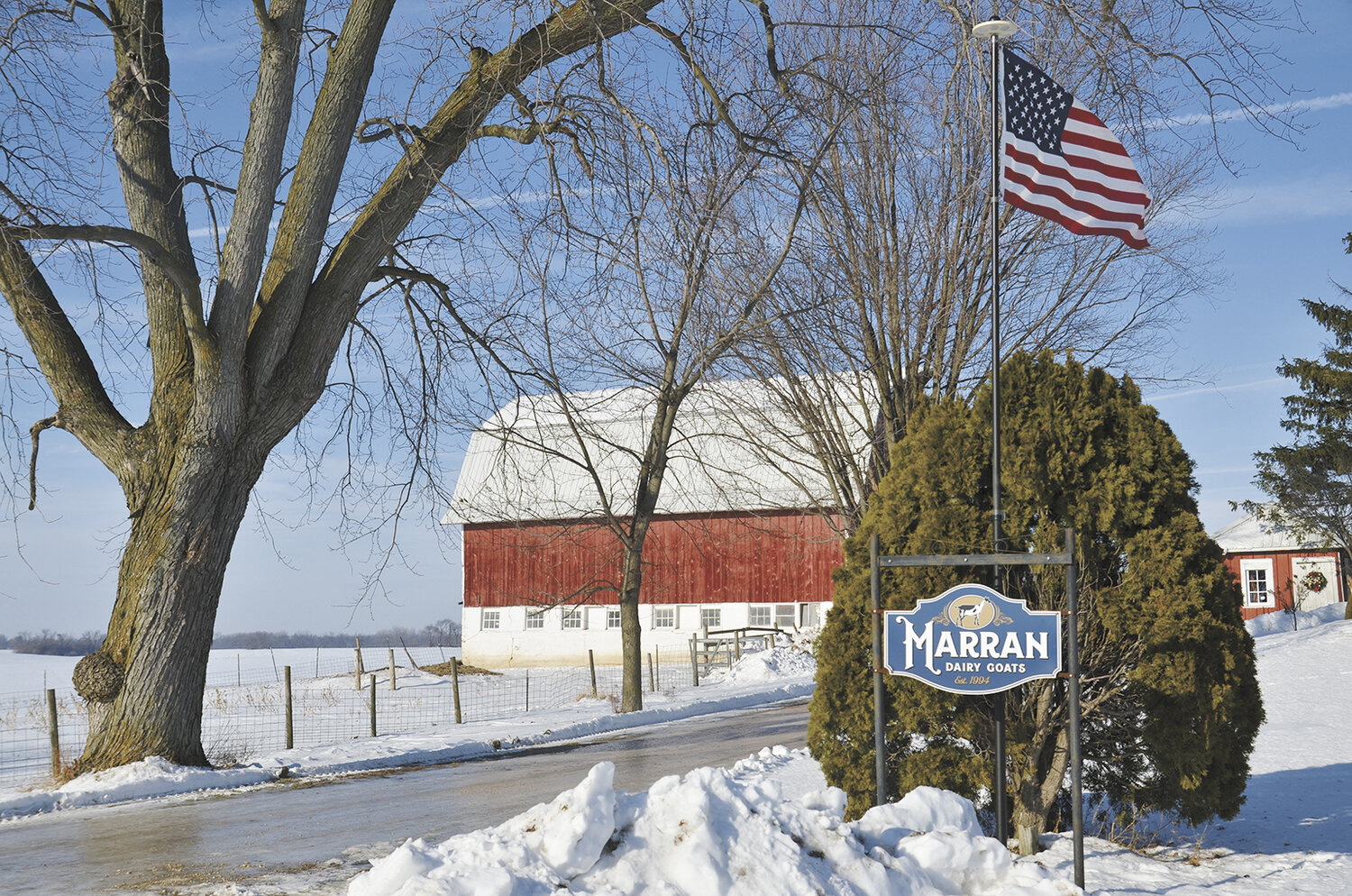
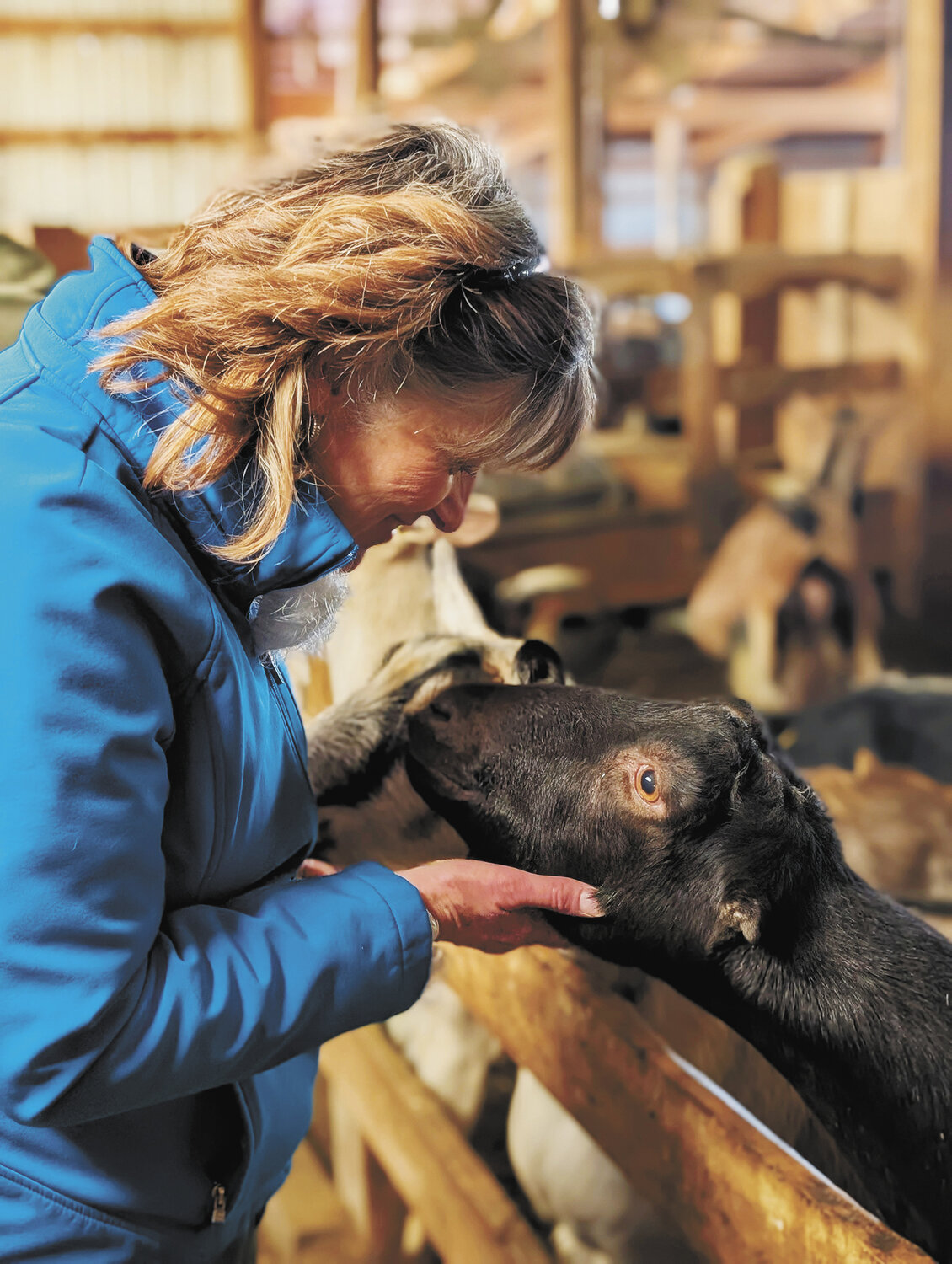


MILTON, Wis. — Dairy farmers Randy and Mary Adamson know success in both the show ring and the bulk tank. Though they operate a commercial herd simultaneously with a show herd, milk is the priority at Marran Dairy Goats. Their second priority is breeding a show-winning goat.
The Adamsons pursue both passions on their farm near Milton, where they milk 200-220 goats. Randy has also served several terms as president of the Wisconsin Dairy Goat Association since 2007.
Randy said their goat herd is a 4-H project that got out of hand. In 1994, the Adamsons purchased two registered goats for their oldest daughter to show.
“We started showing and got hooked on shows,” Randy said. “We enjoy putting goats in the show ring.”
Randy grew up milking cows and hoped to take over his family’s farm one day. However, tough financial times of the 1980s prevented this.
“Our farm was a casualty of high interest rates,” he said. “We made it to 1983, and then I started working construction. I always wanted to get back in but hated giving up that paycheck.”
In 2009, the opportunity arose to buy the neighbor’s herd of 150 milking goats. Randy left behind a career in construction to pursue the goats while Mary worked part time for the school district.
“It was a gamble,” he said. “It wasn’t a case of, ‘I hope this works.’ I had to replace my income. It was a leap of faith. God wanted us to milk goats; He really did. The circumstances that led us to this point are more than just coincidence. We’ve been very lucky.”
After renting their neighbor’s barn for two years, Randy and Mary brought their goats home in 2011. That same year, they built a double-12 parlor and a barn while also adding onto an existing shed.
The Adamsons’ herd is Dairy Herd Improvement Association tested six times yearly. Eight years ago, the Adamsons started doing extended lactations, milking certain goats continuously without breeding them. Approximately 25-30% of their herd, or 50-60 head, are milked through each year. They said it has proven to be a low-risk, high-reward strategy.
“We run does 2-4 years sometimes without kidding,” Randy said. “My poster child milked 6.5 years on her first lactation and averaged 10.1 pounds. It’s so genetically implanted in them not to milk in the winter that they will drop down to 6-7 pounds in January, and by March, they’re giving 10-12 pounds a day. It’s amazing.”
Randy said extended lactations also saves on raising kids and kidding issues.
“Goats can die from kidding problems, such as a torn uterus, ketosis or mastitis,” he said. “(This way) all she has to do is come in here, eat her hay and grain, make her 10 or 12 pounds and go back out. If she’s milking, I’m just never going to breed her.”
Extended lactations also help provide more milk during the winter.
“We milk year-round and get paid more for winter milk than we do for summer milk,” Randy said.
The Adamsons have a 2,600-2,700-pound herd average on a 305-day lactation and ship their milk to Saputo Inc. Randy is selective about which doe kids to retain for replacements and only keeps kids from does producing at herd average and above.
“We cull pretty hard; nobody gets a second chance,” he said. “If she doesn’t make it as a yearling, she is culled.”
Milk is the focus of breeding on the commercial side, whereas their focus of A.I. breeding is to develop a show winner. All does are bred either by a live buck or through A.I., which is primarily done by Mary. About 30%-35% of the herd is registered.
The Adamsons do a fair amount of merchandising with both their commercial and show herds.
“We have goats in California and New York and a lot down South,” Randy said. “We also usually sell 8-10 grade commercial bucks per year. They have to be from does with two generations of 3,000-pound dams.”
The Adamsons milk mostly Alpines as well as a few Lamanchas. The Lamanchas are Mary’s and are part of the show herd.
Dozens of ribbons reflecting this year’s show winnings line the parlor wall, with Alpine and Lamancha breeds equally represented.
“We’re more known for our Alpines than our Lamanchas around the Midwest,” Randy said.
The Adamsons attend 6-8 shows per year. Their agenda always includes the Wisconsin and Minnesota state fairs and the Wisconsin Dairy Goat Association show. They take goats to the national show if it is held within 8-10 hours from home.
“We just finished up 25 years at the Wisconsin State Fair and 20 years at the Minnesota State Fair,” Randy said. “We’ve had the best doe in show at the Wisconsin State Fair seven times.”
The Adamsons’ early years of showing brought limited success, however.
“We didn’t know anything,” Mary said. “We used a buck that we probably lost two generations of because it didn’t cross. He wasn’t that good.”
The Adamsons worked their way to the top of the show circuit by studying pedigrees, paying attention to which goats were winning, and making wise investments and smart breeding choices.
The couple traces their success back to a 5-month-old doe they purchased at the national convention sale in 2006. Her name was Rapture and she was best in show at the Minnesota State Fair as a yearling.
Generations of good breeding by the Adamsons ensued. In 2013, Rapture was reserve national champion, and five of her offspring were also champions.
“Anybody can buy a good doe,” Mary said. “You have to be able to breed more.”
Randy agreed.
“Every doe we take in the ring has our name on it for generations on the doe’s side,” he said. “That’s kind of fun. Rapture was a gift. She put us on the map. Every doe we take in the ring goes back to her.”
Rapture’s grandson, Rochester, won national premier sire in 2017, 2018 and 2025. A homebred Alpine buck from a homebred dam, Rochester won his most recent accolade after he died.
“Rochester was a blessing and a fun buck to show,” Randy said. “Mary loved showing him. He was a gentle giant. He once won best in show six out of six times at a show in Missouri.”
Randy said showing is their connection to the industry.
“We’ve met so many nice people from around the country and made some very close friends,” he said. “That connection is so fun.”
With accomplishments stacked up on both the milk side and the show side, the Adamsons have made a name in the industry.
“It’s been a fun ride,” Randy said.
 |
 |
 |
 |
Share with others


Comments
No comments on this item Please log in to comment by clicking here