


ROCHESTER, Minn. — The year is 1919, and the Sisters of St. Francis in Rochester have purchased 212 acres for a dairy farm. By 1923, the barn was built and the dairy had commenced supplying milk to one of the Sisters’ ministries, St. Mary’s Hospital, in Rochester.
According to a 1986 Caring Spring article, the farm would supply the majority of the hospital’s milk until 1953. After 1953, the milk was sold to creameries for a decade before the herd was sold in 1964. In 1969, after five years as a crop farm, the barn and acreage were sold to an investment group.
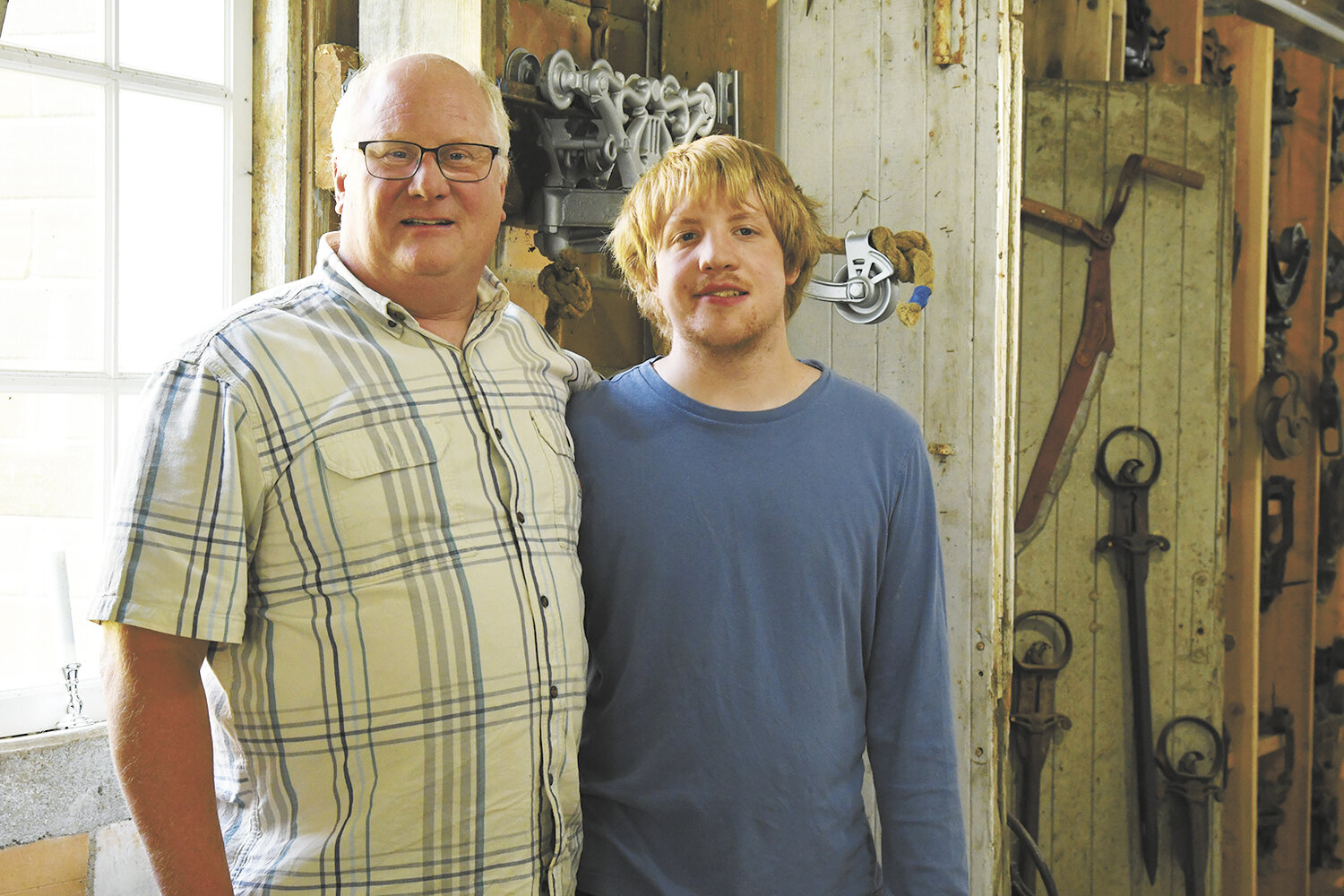
The barn, on the National Register of Historic Places, is still standing today. It is owned by Joe Adamson and his family, who have spent the last six years restoring the building into a usable community and wedding event space.
When the barn was built, it replaced a farm located in what is now the visitors’ parking lot at St. Mary’s Hospital, according to the 1986 Caring Spring article. St. Mary’s Hospital, which opened Sept. 30, 1889, has now been integrated into the Mayo Clinic.
The farm, the 1986 articles notes, was managed by four people over its time as a working dairy. The nuns oversaw these labors. According to a spring 2019 article in “Living from our Common Heart,” Sister Marisa McDonald wrote on this:
“Sister Ludovica, along with her sister, Sister Natalia, and Sister Julia Wilhalm visited the farm every afternoon to check on the animals and the crops ... and to bring food to the workers.”
In 1931, a Rochester Post Bulletin article reported that the dairy had 80 grade and purebred Holsteins.
By 1945, according to an article in that year’s June edition of the News Bulletin, the farm was producing 245,000 quarts of milk annually and 100 gallons of chocolate milk weekly. About 1,800-2,000 milk bottles were washed and sterilized weekly for use at the hospital. Adamson said the milk also went to producing butter weekly. A milk bottle top in Adamson’s collection from around 1946 was red and imprinted with “St. Mary’s Hospital Grade A Pasteurized Milk.”
Adamson said the milk cans were cooled using water from the water tower located near the milkhouse before going to the hospital to be processed. The milk was pasteurized by the nuns at the hospital, with Sister Ludovica overseeing, according to the 1986 article.
The barn is built in an H shape. The building looks like two round peaked barns attached by a third barn in between. The space also includes two siloes that can hold 75 tons each of forages, six grain bins and multiple buried cisterns outside. The barn was also one of the early barns in Olmsted County to be electrified, according to Adamson. The 1920s knife switch is still on display.
The barn was built by Albert Ramthun. Though the exact plans of the barn are not known, Adamson said Louden Machinery Company of Fairfield, Iowa, had building plans for an H-shaped barn that is very similar, right down to the 9-pane windows that could be tipped open to let in fresh air. He believes these plans may have been the facility’s inspiration.
The barn is made of salt-glazed tiles. The tile came from Fort Dodge, Iowa, and was shipped in 17 boxcars. According to McDonald’s article, the structure was built for approximately $40,000.
The barn floor originally was covered by cork bricks. Adamson said these are easier on cows’ hooves and the cork also has antimicrobial properties. A small portion of the barn continues to have the original cork bricks as an example of the past.
The barn also had an overhead track system with different containers for feed, manure and milk cans that could be hung and slid through the barn.
“The entire barn was pretty much cutting-edge ag science at the time,” Adamson said.
Adamson is the fourth private, individual owner of the barn. Today, the barn sits on a handful of acres. According to an Oct. 5, 1973, article in the Post Bulletin, in 1973 the majority of the original acreage was approved to be zoned for country estate residences.
That same year, it was sold to Allen and Jean Larson, owners of Trade Mart Furniture, along with 34 acres. In 1990, the property was sold again, this time with 23 acres attached to Lloyd Drahos for $235,000. It was sold to a friend of Adamson in 2012.
“One day (in 2019 my friend) goes, ‘I’m just going to sell the barn,’” Adamson said. “I said, ‘Sold.’”
Adamson retired from a career in the Navy in 2008. When Adamson bought the barn, it had fallen into disrepair. Adamson and his children — whom he said have played a key part in the restoration process — cleared out seven 20-cubic-yard dumpsters of trash.
Adamson did not grow up on a dairy farm, but said he would occasionally help a friend during college on their family’s farm.
“That’s a very tough life that’s underappreciated,” Adamson said. “Even maintaining this one building with no cows in it, it’s a lot of work.”
Adamson has been working to repair the building in a historically accurate way. The hay mow floor — which had been so rotten that only about 40% was salvageable — can now be walked on. One of the mows has been restored into a chapel-like space with pews and lighting for wedding ceremonies.
The roof is now covered in steel. Adamson said steel roofs were a roofing option during that time period, but there is no evidence the barn ever had steel on it, making the repair historically correct but not accurate.
On the outside, Adamson has had to repair damage, especially on the corners of the barn. He found a cache of historic, salt-glazed tiles for repairs. Adamson said the tiles would have cost at least $25 each to have made.
The landscaping has also been restored. Adamson said the construction of one of the original outbuildings caused significant erosion over time near the barn. Today, the original contours of the earth have been restored.
Adamson is also creating historic farming displays within the barn. He has collections of historic barn pulleys, automatic hay forks, patterned cloth grain sacks and milking equipment.
“When people go to an event, especially a wedding event, let’s face it, after a while, you get bored,” Adamson said. “We’re going to set this up so people can walk around and say, ‘Oh, what’s this?’”
Under Adamson the barn has had life again. During the coronavirus pandemic, the barn’s large floor plan of 18,000 square feet provided a space for Adamson to host the Scouting America troop he helps to lead, which his son, Will, is part of.
As part of the restoration process Joe has reclaimed prairie land and established wildflower habitat. The acreage is legally a farm again with the help of the local U.S. Department of Agriculture office providing information and support. There are bee hives on the property and Adamson said he hopes to eventually host veterans for the Heroes to Hives program that he is part of.
“One of the reasons why I bought the barn is that it’s going to be used in the community,” Adamson said.
 |
 |
 |
 |
Share with others


Comments
No comments on this item Please log in to comment by clicking here